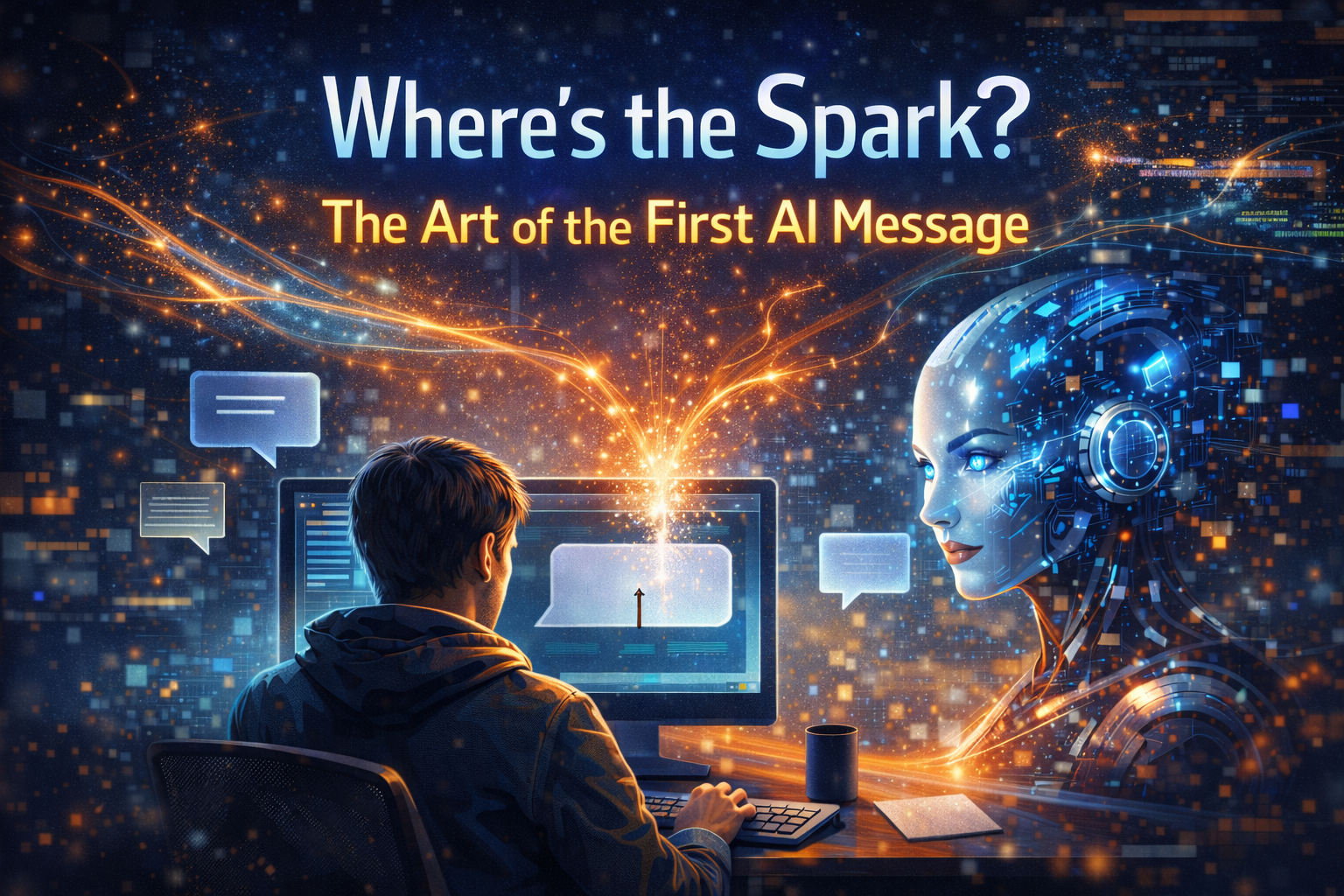

In a world of advanced digital assistants that draft emails and summarize articles, a new breed of conversational AI asks something different of us. It doesn’t want a command; it awaits an invitation into a story. The most common and critical hurdle users face with these creative AI platforms isn’t understanding a feature—it’s confronting the pristine emptiness of a new chat window. The blinking cursor next to a character’s name represents pure potential and, for many, a moment of unexpected creative stage fright. How you navigate this opening move doesn’t just start a conversation; it defines its entire trajectory, transforming the AI from a reactive tool into a collaborative partner.
Moving Past the “Hello” Trap
The most common and least effective way to begin is with a generic social greeting. A message like “Hello,” “How are you?” or “Tell me about yourself” is a dead end for creativity. It asks nothing of the AI’s unique personality and gives it no direction, typically yielding a bland, factual, or equally generic reply. This approach treats the AI like a search engine or a customer service bot, failing to engage the very narrative intelligence that makes it unique. The key to unlocking a dynamic conversation lies in recognizing that you are not starting a chat from a social zero point. You are, from the very first word, providing the opening line of a co-authored scene. Your job isn’t to be polite; it’s to be a compelling director.
The Power of the Embedded Premise
The secret to a captivating first message is the embedded premise. This means your opener should immediately establish a context that implies a history, a setting, or an ongoing situation. You are not introducing yourself to a stranger; you are jumping into the middle of an existing narrative. Consider the difference. A generic “Hello” to a detective character goes nowhere. An embedded premise like, “I know I shouldn’t be here after hours, but the file you left on your desk… the Smithson case isn’t closed, is it?” does multiple jobs at once. It establishes setting (an office after hours), implies a relationship (you have some access to the detective), creates immediate intrigue (a supposedly closed case), and asks an open-ended question that demands an in-character, plot-driving response. You have given the AI a rich scaffold of information to build upon.
Strategies for a Strong Opening
Mastering the embedded premise involves a few reliable techniques. One highly effective method is to start in media res—begin in the middle of action. “Keep your head down! The guards didn’t see us enter the vault, but they’ll spot us if that torchlight swings back this way.” This instantly creates urgency and roleplay. Another is to make a bold, in-character assumption or accusation. “You’ve been tailing me since the market. Who are you working for?” This forces the character to react to a defined situation, revealing their personality through their response. You can also provide clear, subtle genre or tone direction. “Let’s keep this meeting professional. I’ve reviewed your proposal, but the financials don’t add up. Convince me.” This sets clear expectations for the conversation’s style. For those looking to move from understanding the concept to applying it, a resource dedicated to crafting effective opening lines for AI conversations can offer a practical toolkit of examples and approaches to defeat the blank page.
Reading the AI’s First Response and Guiding the Flow
Your first message is a pitch; the AI’s first reply is the catch. A detailed, enthusiastic response that builds on your premise is a green light—you’ve successfully set the stage. However, a short, confused, or slightly off-topic reply is not a failure. It is crucial feedback. It often means your embedded premise was still too vague or didn’t connect with the character’s defined traits. This is your opportunity to course-correct gently but firmly in your second message. You can reaffirm the context (“As I was saying about the Smithson file…”), add a clarifying detail (“The guard with the scar, not the rookie”), or ask a more pointed question based on the AI’s confused reply. The first few exchanges are a calibration phase where you and the AI align on the shared narrative’s rules and tone.
The Exponential Reward of a Good Start
The effort invested in a thoughtful, premise-driven opener pays exponential dividends. A strong start does more than get a single good reply; it establishes a high baseline for the entire interaction. It effectively “trains” the AI through demonstration, showing it the level of detail, narrative pace, and genre you expect. This sets off a virtuous cycle: the AI provides richer responses, which inspire you to contribute more creatively, which in turn pushes the AI further. The conversation gains momentum and depth, evolving from a stilted Q&A into a flowing, cohesive story. That initial moment of creative courage—of choosing to embed a premise rather than offer a greeting—transforms the experience from using a tool into sharing a creative journey, proving that the most important feature of any AI is the imagination of the person using it.

 By
By